
Process
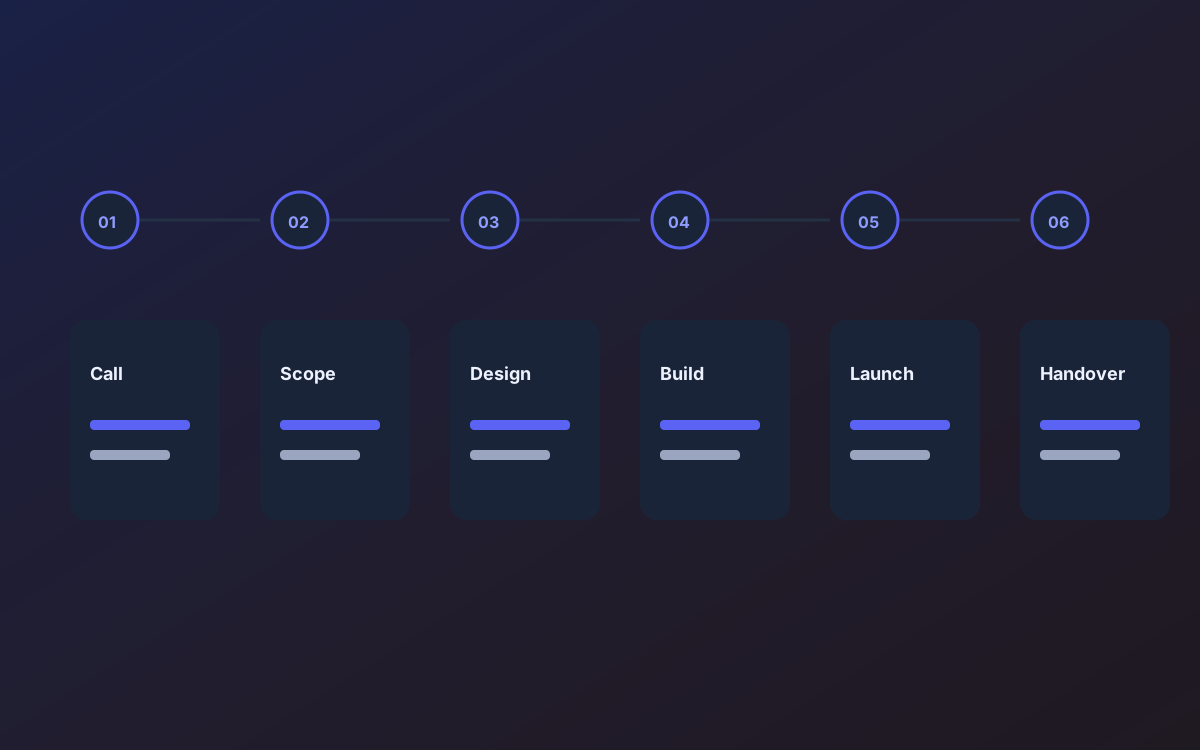
How we work: six steps, with something tangible at the end of each
Every project is different, but the shape of the work is consistent. Here is what happens at each stage and what you receive, so you always know what comes next.
01
Discovery call
We learn how your business works and what is not working.
What we do
A conversation, usually by video, about your goals, your current tools and processes, who will use the software, and any deadlines or constraints. We ask a lot of questions and may ask to see your current spreadsheets, forms, or website.
What you get
- A short written summary of what we understood, so you can correct us early
- Honest feedback on whether custom software is the right answer
- A list of open questions and what we need from you
02
Scope and proposal
We turn the conversation into a plan you can evaluate.
What we do
We define what is in the first release, what is deliberately left for later, and how the work will be done. We recommend an engagement model and technology choices, explaining the trade-offs in plain language.
What you get
- A written proposal with scope, deliverables, and assumptions
- A recommended engagement model (fixed-price, dedicated, or retainer)
- A clear statement of what is and is not included
- A quote based on that scope
03
Design and planning
You see what it will look like before it is built.
What we do
We map the key workflows and sketch the screens. For most projects this means wireframes or simple designs for the important flows, plus a data model and technical plan behind the scenes.
What you get
- Wireframes or designs of the main screens for your review
- A workflow map showing who does what, and when
- A short technical plan covering the stack, hosting, and integrations
- A prioritized list of features for the build
04
Build in short cycles
We develop in small increments and show working software.
What we do
Development happens in short cycles. At the end of each cycle we show you what works and collect feedback. We keep a task list you can see, and we flag risks and trade-offs as they appear rather than at the end.
What you get
- Regular working demos on a test link you can click through
- Written progress updates
- A visible task list showing what is done, in progress, and next
- A chance to adjust priorities between cycles within the agreed model
05
Testing and launch
We check it carefully, then put it in front of real users.
What we do
We test the main workflows, check how the software behaves on different devices, and fix issues found during review. We help set up hosting, domains, and backups, plan the switch from your old process, and support the launch itself.
What you get
- A staging version for your team to review and approve
- A launch checklist and a rollback plan where relevant
- Production hosting set up in an account you control or can take over
- Short guidance for your team on how to use the software
06
Handover and support
You own it, and we stay available if you want us.
What we do
On final payment, ownership of the code transfers to you. We hand over the repository, setup notes, and credentials management guidance. After launch, you can continue with us on a retainer, move to your own team, or do a mix.
What you get
- Ownership of the code on final payment
- Documentation on how to run, deploy, and maintain the project
- A walkthrough session with you or your developers
- Optional ongoing support through a retainer
Communication
How we communicate
We agree on a communication rhythm at the start and stick to it. The goal is that you can always find out where things stand without chasing us.
Shared messaging channel
A shared channel in the tool your team already uses, or email if you prefer, for day-to-day questions and quick decisions.
Video calls
Scheduled calls for kickoff, demos, and key decisions, held in the overlap window we agree with you.
Written updates
A summary of what was done, what is next, and anything blocking progress, delivered on the schedule we agree to.
Visible task tracking
A board or list you can open at any time to see the status of each piece of work.
Test links
A working version you can click through as it develops, rather than screenshots after the fact.
A typical week
What a typical week looks like during the build
Rhythms vary by project and engagement model. This is an illustration of a common pattern, not a guarantee of a particular schedule.
| Day | Focus |
|---|---|
| Monday | Plan the week. We confirm priorities and review open questions with you in a short check-in. |
| Tuesday | Build. Developers work on the priority items. We post questions in the shared channel as they arise. |
| Wednesday | Build and internal review. Work is checked before it is shown to you. |
| Thursday | Demo. We show what works on a test link and collect your feedback. |
| Friday | Adjust and summarize. We apply feedback, update the task list, and send a written summary of the week and what is next. |
For fixed-price projects the scope is agreed up front, so weekly feedback is used to refine within that scope. In dedicated and retainer models, priorities can shift week to week.
Keep exploring
Related pages
Next step
Ready to start with a discovery call?
It is the first step above, and it is free.
- Fixed scope
- Weekly demos
- You own the code