
Service
Mobile apps built for the job on site and the customer on the go
iOS and Android apps with offline-tolerant capture, push alerts and one shared backend with your web product. Tested on real phones every week.
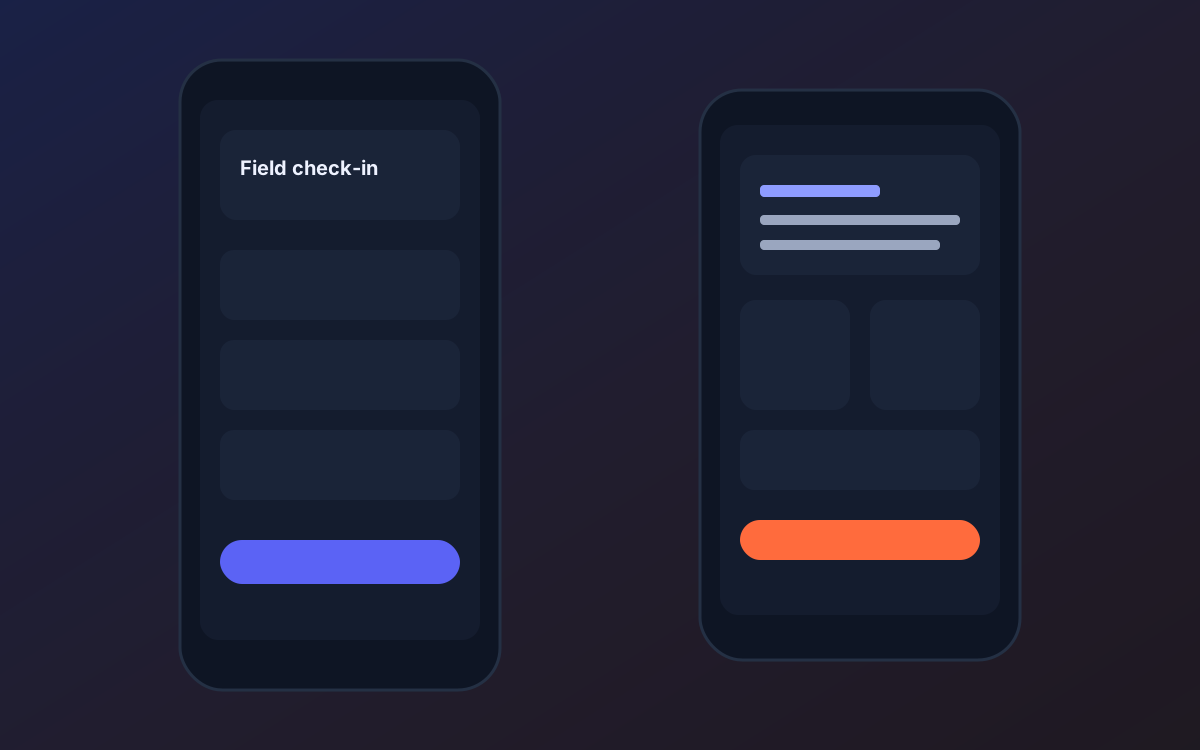
A desktop site squeezed onto a phone screen is not a mobile strategy. Drivers need to capture a delivery photo with gloves on. Inspectors need a checklist that works in a basement with no signal. Customers want a booking confirmed with a tap and a reminder that actually arrives. These are phone-first jobs and they deserve phone-first design.
We scope mobile work around the moment of use: what has to work offline, what has to sync and when, what can wait until there is a connection. Those decisions drive the architecture, so we write them down before building. The app then shares authentication and data with your existing web product through one API, so mobile and web do not drift into two versions of the truth.
We default to cross-platform builds with React Native or Flutter so one team ships iOS and Android together. When a device feature or store requirement demands native code, we flag it early. Your Apple and Google developer accounts own the listings, and we prepare the builds, release notes and checklist for submission.
The problems
What usually goes wrong
Paper and photos that never reach the system
Field staff write on forms, snap pictures into personal chats and the office retypes everything later, if it arrives at all.
Apps that fail without signal
Warehouses, basements and rural routes have patchy coverage. An app that needs a connection to save work gets abandoned in the first week.
Notifications nobody receives
Dispatch changes, appointment reminders and approvals get lost in email. Without reliable push, the phone is just a smaller inbox.
Two backends for one product
A mobile app built separately from the web product doubles the maintenance and creates mismatches in accounts, permissions and data.
What you get
Deliverables
iOS and Android apps
A cross-platform codebase producing store-ready builds for both platforms, sharing logic and design wherever sensible.
Offline and sync design
Local queues, conflict rules and a clear picture of what happens when work is saved without a connection.
Push notifications
Alerts for jobs, status changes and reminders, with preferences users can control.
Device features
Camera, document capture, signatures, location and barcode scanning, included where the job actually needs them.
Shared API contract
A documented interface shared with your web product, so a change in one place does not silently break the other.
Store release package
Internal test tracks, version management, release notes and a submission checklist for the App Store and Google Play.
How it works
Step by step
01
Define the moment of use
We observe or interview the people who will use the app and capture where they are, what they carry and what connection they have.
02
Write the mobile scope
Supported devices and OS versions, offline behavior, permissions, notifications and non-goals, together with price and milestones.
03
Design and prototype
Tap-through prototypes on real phones for the critical flows, validated with a few of the actual users before full build.
04
Build with device demos
Each week you receive a test build through TestFlight or Google Play internal testing and try it on your own phone.
05
Pilot, release and hand over
A small pilot group uses the app first. We then prepare store submissions with you and hand over the code, accounts map and release process.
06
Plan the update path
We document how new versions are built, tested and submitted, including forced updates and breaking API changes, so the app keeps working as operating systems and your backend evolve.
Timeline
How long it typically takes
A focused app with a handful of workflows and an existing API often takes eight to fourteen weeks from approved scope. Apps that need a new backend, complex offline sync or heavy device integration generally take longer. Store review times are controlled by Apple and Google and can add days to a release, so we plan for them instead of promising dates they control.
Who it's for
- Businesses with drivers, inspectors or crews who currently work from paper and chat
- Products with a web platform that now need a customer-facing phone experience
- Teams that need push, camera or offline behavior a mobile website cannot deliver
Who it's not for
- Products where a responsive web app would serve users just as well
- Games or graphics-heavy experiences that need specialized native engines
- Buyers who want an app published under our accounts rather than their own
Keep exploring
Related pages
FAQ
Frequently asked questions
React Native or Flutter?
We choose based on your team and the product. React Native fits well if you already use React on the web, while Flutter suits highly custom interfaces. We explain the trade-offs in the scope.
Do you publish the app for us?
We prepare the builds and guide you through submission, but the App Store and Google Play listings live in your developer accounts so you keep full control.
Can the app work offline?
Yes, when the scope says so. We design the local storage, sync order and conflict handling explicitly, because offline support added late tends to be unreliable.
Do you need our existing backend?
Not necessarily. We can connect to your current API, extend it or build a new one. The mobile scope states which approach is used and what changes on the server side.
What about updates after launch?
Operating system updates and store policy changes are routine. Many clients keep a retainer so the app stays compatible and improvements ship in small releases.
Which devices and OS versions will it support?
We agree a device matrix in the scope based on who actually uses the app, typically the current and previous major versions of iOS and Android. Supporting older devices costs more, so we decide it deliberately.
Next step
Tell us what you want to build
A short call, then a written scope in plain language before any build starts.
- Fixed scope
- Weekly demos
- You own the code