
Mobile
Flutter development for polished cross-platform mobile apps
Flutter draws its own interface rather than relying on platform controls, which gives us precise control over how the app looks and behaves on both iOS and Android.
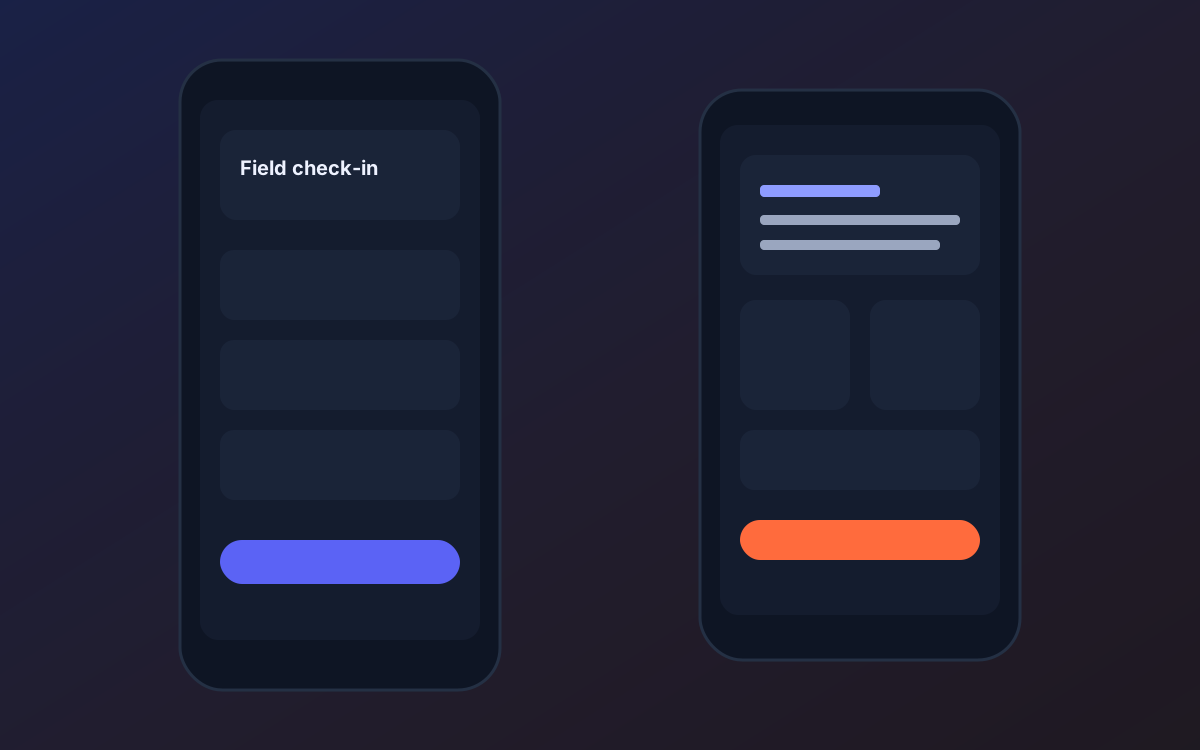
Why we use it
Why we build with Flutter
Flutter draws its own interface rather than relying on platform controls, which gives us precise control over how the app looks and behaves on both iOS and Android. It is a strong choice when design consistency matters or when the app has a custom, animated feel. One codebase serves both platforms.
What we build
What we build with Flutter
Customer apps with a branded feel
Apps where the interface itself is part of the product experience and should look identical across devices.
Booking and service apps
Scheduling, payments, reminders, and account management for service businesses and clinics.
Data-entry and inspection tools
Forms with photo capture, checklists, and sync for people working in the field.
MVP mobile apps for startups
A first version of a mobile product that covers the core flow so you can learn from real users.
How it fits our stack
What we pair it with
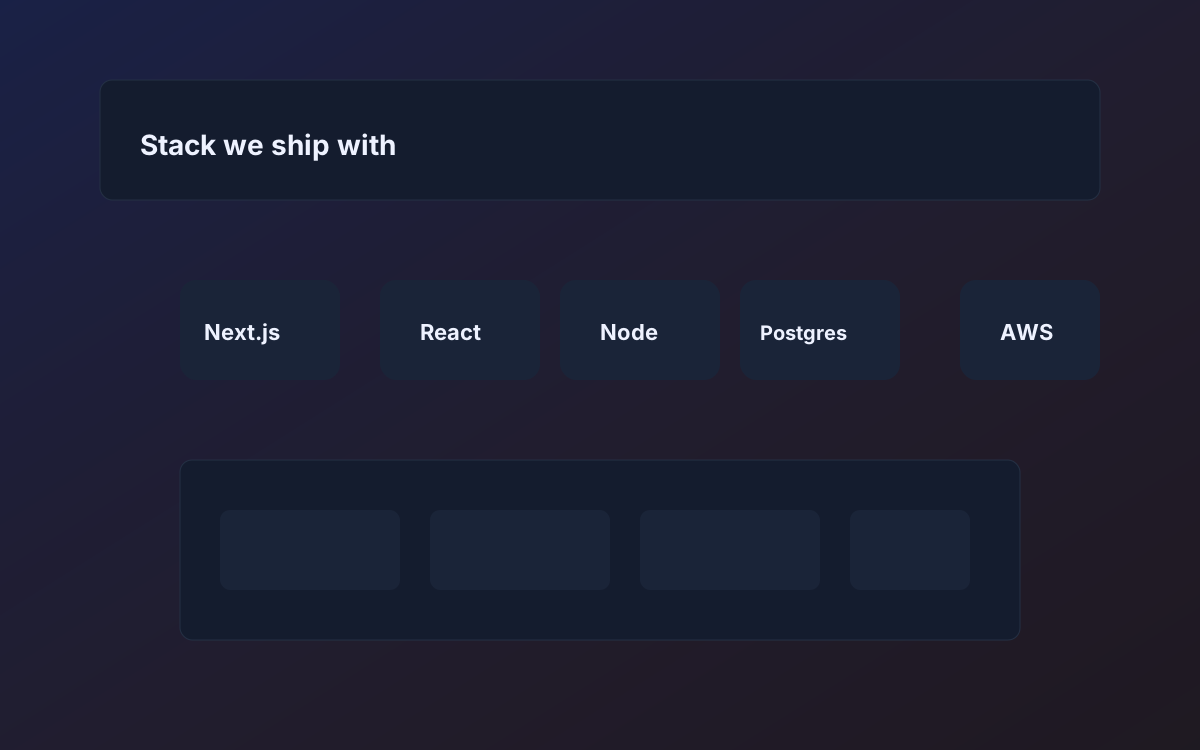
Flutter apps connect to the same kinds of back ends we use elsewhere: Node.js or Laravel APIs, with PostgreSQL for data and AWS for hosting. Flutter does not share code with a React web app, so it suits projects where mobile is the primary product.
Honest advice
When something else is better
If you already have a React web app and want to reuse skills and logic, React Native is usually a better match. For a simple tool used by a few staff members, a responsive web app is cheaper. For apps that rely deeply on one platform's native features, native development may be the better path.
FAQ
Frequently asked questions
Flutter or React Native, which should I pick?
If you have a React web app or team, React Native tends to fit. If design control and a custom interface are the priority, Flutter is a strong option. We will recommend based on your project, not our preference.
Will it feel native on iPhone and Android?
It can follow each platform's conventions where that matters. Most business users will not notice a difference when it is built carefully.
Can Flutter also produce a web version?
It can, but for content-heavy or search-driven sites we recommend a separate web build, such as Next.js.
What happens after launch?
Apps need updates as iOS and Android change. We offer retainer support for fixes and improvements, and you can choose whether to use it.
Next step
Thinking about Flutter for your project?
Tell us what you want to build and we will say plainly whether it is the right fit.
- Fixed scope
- Weekly demos
- You own the code