
Service
Dedicated developers who work inside your team
Senior engineers on your repository, your board and your standups. Capacity you direct week to week, without the delay of a hire or the distance of an agency.
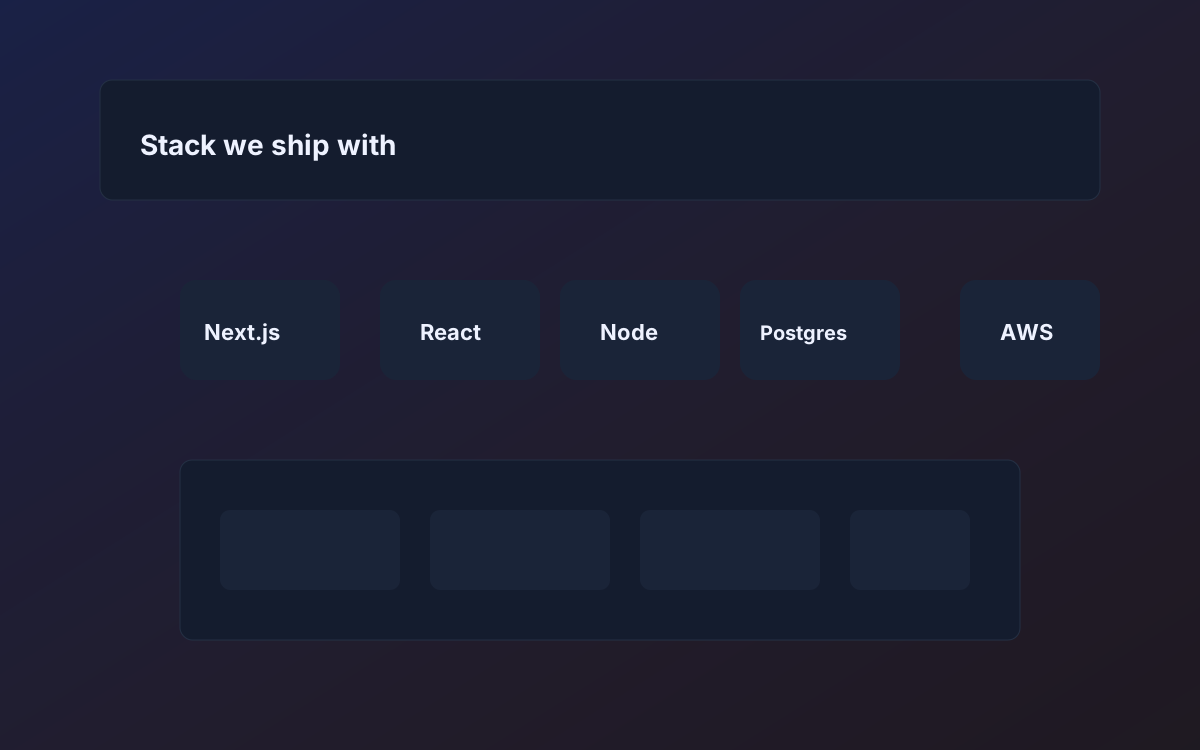
Sometimes the plan is clear and the bottleneck is hands. Recruiting a senior engineer takes months, freelancers disappear mid-sprint, and a large agency wraps your backlog in account managers. A dedicated developer from Delvix sits in your tools, reads your codebase, joins your standups and ships against the priorities you set.
You talk to the person writing the code. Up front we agree on the workstream they own, how much time they commit each month and how quality is checked: pull requests reviewed by you or your lead, a short demo of what shipped each week and a written summary at month end so stakeholders are not guessing.
The work lives in your repositories, your project board and your cloud accounts. Nothing is kept in a parallel codebase on our side, so ending the engagement, or turning the developer's knowledge into onboarding for your next full-time hire, is a clean handoff instead of a negotiation.
The problems
What usually goes wrong
Hiring takes longer than the roadmap
A senior search can eat a quarter before anyone writes code. Meanwhile the backlog grows and the launch date slides.
Freelancers who vanish
Solo contractors are fine until they take another contract. Context walks out the door with no one to pick it up.
Agency layers between you and the code
Account managers relay questions and answers, details get lost, and you never meet the engineer who made the decision.
Knowledge trapped in one head
When the only person who understands a module is stretched, every change becomes a risk. Documentation never keeps pace with delivery.
What you get
Deliverables
Named engineer or small pod
You know who is on your project. Changes in staffing are discussed with you in advance, not discovered in a commit log.
Agreed monthly capacity
A committed number of days written into the proposal, so planning is predictable on both sides.
Onboarding to your codebase
Environment running, first pull request merged and the main modules mapped within the opening weeks.
Delivery in your tools
Your Git host, your tracker, your chat. We adapt to your process rather than bolt on ours.
Weekly demo or review rhythm
Something you can see every week, plus code review that keeps standards high and surprises low.
Monthly written summary
What shipped, what slipped, what is next and what risks we see. Short enough to forward to leadership.
How it works
Step by step
01
Define the workstream
We agree on the slice of the product the developer owns, the stack involved and what a good first month looks like.
02
Match and confirm
We propose an engineer whose experience fits your stack and your pace. You can speak to them before anything is signed.
03
Access and onboarding
Repository, staging environment and tracker access are set up with least privilege. The engineer gets the system running and takes a small ticket to production.
04
Run the cadence
Standups, pull requests and a weekly demo. Priorities are yours to change as the product teaches you things.
05
Review monthly and adjust
Each month we look at what shipped and decide to continue, scale capacity up or down, or wind down with a documented handoff.
06
Hand off or convert
When the engagement ends, or turns into a hire of your own, we document open work, record a knowledge walkthrough and remove our access, so the transition leaves your team fully in control.
Timeline
How long it typically takes
Most engagements can start within a couple of weeks of agreeing the workstream, depending on the engineer's availability and how fast we receive repository access. The first merged pull request commonly lands in the first one to two weeks of onboarding. After an initial term set in the proposal, arrangements typically run month to month.
Who it's for
- Product teams with a defined backlog and no hire in place yet
- Engineering leads who need a senior pair for a specific workstream
- Companies finishing a rescue or MVP who want continuity from the same people
Who it's not for
- Teams with no technical owner to prioritize and review the work
- Buyers who want a fixed outcome at a fixed price, which a project contract serves better
- Organizations that need round-the-clock on-call platform coverage
Keep exploring
Related pages
FAQ
Frequently asked questions
How is this different from hiring a freelancer?
You get written expectations, a review rhythm, a monthly summary and a team behind the engineer if they are unavailable. The goal is dependable delivery, not just hours on a timesheet.
Will the developer work in our time zone?
We keep meaningful overlap with US, UK, EU or Gulf hours depending on where you are. Overlap windows are agreed before the engagement starts.
Can we meet the person before we commit?
Yes. A short conversation with the proposed engineer is part of confirming the match, and we would rather adjust now than after a month of friction.
What does access look like and how is it protected?
We request only what the workstream needs, use your single sign-on or named accounts where possible and remove access at the end. We sign a mutual NDA before sensitive material is shared.
Can we convert the engagement later?
Yes. Many teams move from a dedicated developer to a retainer or a fixed-price project once a scope firms up. We write the transition into the next proposal.
What if the engineer is unavailable or leaves?
We name a backup who is briefed on your project, so illness or leave does not stall delivery. If we must change the engineer permanently, we plan a handover period with you before the switch.
Next step
Tell us what you want to build
A short call, then a written scope in plain language before any build starts.
- Fixed scope
- Weekly demos
- You own the code